A first impression isn’t just important—it’s everything. When a new subscriber joins your email list, you have a brief, critical window to capture their attention, build trust, and guide them toward action. That’s exactly where an optimized email welcome sequence comes into play.
A high-converting welcome sequence is far more than a generic “thanks for subscribing” autoresponder. It is a strategic email automation designed to nurture leads, establish your brand’s credibility, and ultimately drive sales.
If you want to turn casual readers into loyal customers, here is the step-by-step anatomy of a welcome sequence that actually converts.
1. The First Impression: Your Immediate Welcome Email
Your very first email sets the tone for your entire relationship with the subscriber. It has the highest open rate of any email you will ever send, so make it count.
This initial email should:
- Greet the subscriber warmly and authentically.
- Deliver the promised lead magnet, discount, or freebie immediately.
- Set clear expectations for future emails.
- Introduce your unique brand voice.
Pro Tip: Trigger this email to send instantly after signup. Even a five-minute delay can dramatically reduce your engagement rates.
2. Set Expectations Early
Clarity builds trust. Subscribers are far less likely to hit the “unsubscribe” button if they know exactly what they signed up for.
In your early emails, clearly communicate:
- Cadence: How often you will be emailing them (e.g., weekly, bi-weekly).
- Content: The specific type of content they will receive (e.g., marketing tips, exclusive discounts, industry news).
- Value: How they will directly benefit from staying on your list.
3. Tell Your Story (And Make It Relatable)
People don’t connect with faceless businesses; they connect with human stories. Use your follow-up emails to build an emotional connection.
Share your brand’s journey by highlighting:
- How and why you started.
- Your core mission and values.
- The driving force behind your products or services.
SEO & Copywriting Tip: Don’t just talk about yourself. Frame your story so it mirrors your audience’s pain points and aspirations. Emotional connection is a massive driver of conversion rates.
4. Deliver Immediate Value
Before you ask for a sale, you need to prove your worth. Give your subscribers something incredibly valuable for free.
High-value content can include:
- Actionable, step-by-step tips.
- A quick tutorial or industry secret.
- A downloadable checklist or resource guide.
Your primary goal here is to make the subscriber think: "If their free content is this good, their paid products must be amazing."
5. Build Authority and Credibility
Trust is the ultimate conversion driver in digital marketing. Show, don't just tell, your audience that you are an expert in your field.
Inject social proof into your sequence by including:
- In-depth case studies.
- Customer testimonials and reviews.
- Client success stories.
- Hard data, metrics, or proven results.
6. Introduce Your Offer Naturally
Once you have established trust and provided upfront value, it is time to introduce your core product or service. The key is to avoid sounding overly promotional or pushy.
To transition smoothly into a pitch:
- Frame your offer as the ultimate solution to their problem.
- Connect the product directly to the pain points you discussed earlier in the sequence.
- Focus on benefits (how it improves their life) rather than just features (what the product does).
7. Use a Strong, Clear Call-to-Action (CTA)
Every email in your marketing sequence should have one singular goal. A confused mind says no, so keep your directions incredibly clear.
A high-converting CTA should:
- Be specific and action-oriented (e.g., “Book Your Free Strategy Call” instead of “Click Here”).
- Stand out visually using buttons or contrasting text.
- Leverage ethical urgency or scarcity when appropriate.
- Be the only primary action requested in the email.
8. Optimize Timing and Sequence Length
A typical, effective welcome sequence includes 3 to 7 emails spaced out over a few days. Finding the perfect cadence depends on your specific audience and sales cycle.
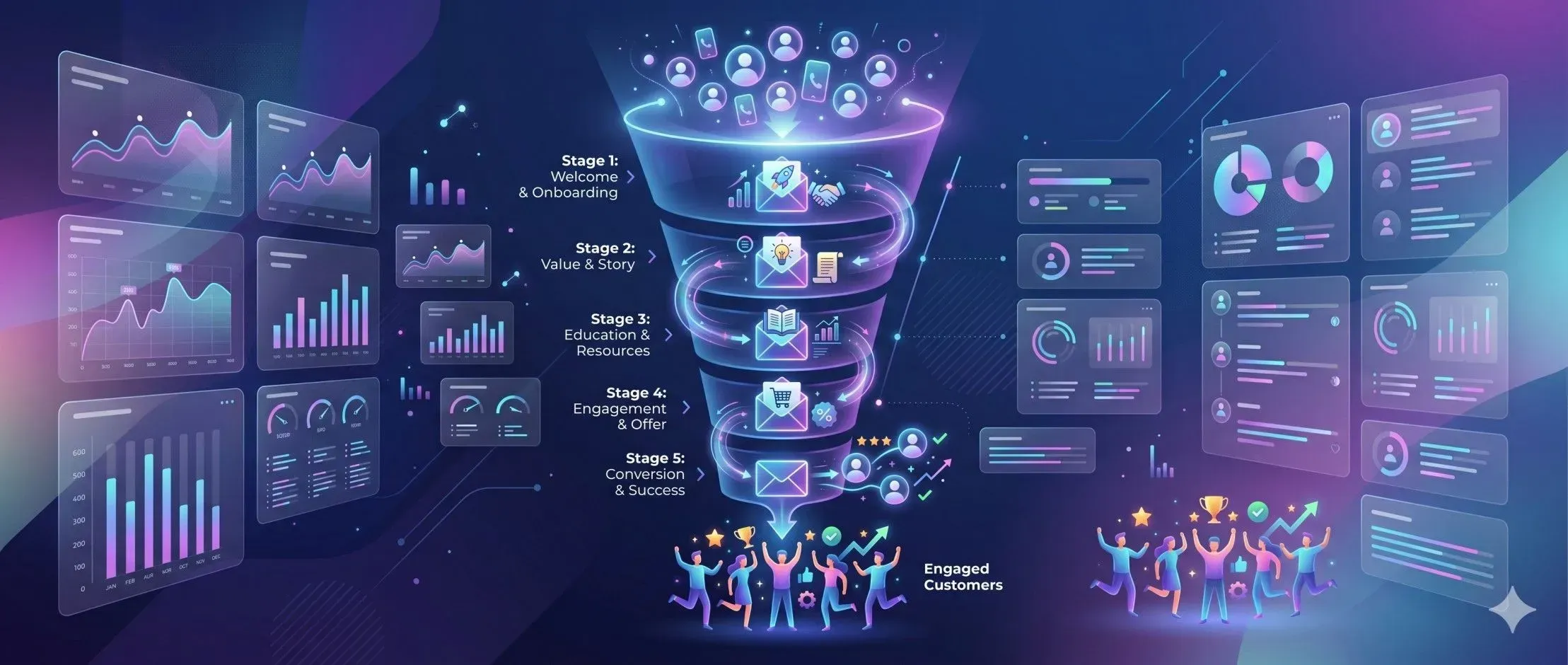
Example of a Proven Welcome Sequence Flow:
| Email # | Timing | Core Purpose |
|---|---|---|
| Email 1 | Immediate | Welcome, brand introduction, and lead magnet delivery |
| Email 2 | Day 2 | Brand storytelling and building relatable connection |
| Email 3 & 4 | Days 3–4 | Delivering pure, actionable value and education |
| Email 5 | Day 5 | Establishing authority via social proof/testimonials |
| Email 6 & 7 | Days 6–7 | The soft pitch, the offer, and a strong CTA |
9. Leverage Personalization and Segmentation
Not all subscribers join your list for the exact same reason. Modern email marketing requires personalization beyond just using a first name.
Use your email service provider (ESP) data to tailor the experience based on:
- Subscriber interests or signup source.
- Behavioral data (e.g., which links they click, what lead magnets they download).
- Demographics or industry type.
Segmenting your audience ensures that every subscriber receives content that feels custom-tailored to their specific needs.
10. Analyze, Test, and Optimize Continuously
A high-converting automated sequence is never truly "finished." To maintain top-tier performance, you must rely on data.
Track these key email marketing metrics:
- Open rates: Indicates the strength of your subject lines.
- Click-through rates (CTR): Indicates the strength of your email copy and CTA.
- Conversion rates: Indicates the strength of your final offer.
- Unsubscribe rates: Indicates if your cadence or content is missing the mark.
Continuously run A/B tests on subject lines, send times, and messaging. Small, incremental improvements compound into massive revenue gains over time.
Final Thoughts
A high-converting email welcome sequence is the perfect blend of psychology, strategy, and storytelling. It serves as an automated bridge, guiding your new subscribers from initial curiosity, to deeply rooted trust, and finally, to decisive action.
When executed correctly, your welcome sequence becomes one of the most profitable assets in your marketing funnel—working 24/7 to turn fresh leads into lifelong customers. If you don't have a structured sequence in place yet, there's no better time to start building one than today.